
The Data Passport

What a dataset should carry, so whoever receives it can use it with confidence.

Last updated

Data deserves papers

Would you take a medicine that came without its package leaflet? Yet every day, organisations make decisions, train AI models and migrate systems on data that arrives exactly like that: just the data, without its papers.

The data passport is what travels with a dataset so the receiver doesn’t have to guess. It tells you how the data is built, what it means, which rules apply, what you may do with it and where it comes from. In short: what the source says it is, instead of what it seems to be.

It works in any data landscape, from a file sent by email to a data warehouse, a data mesh or an EU data space. It is an open specification under Creative Commons CC BY 4.0. It is not a commercial product: there is no software or service attached. We are looking for practitioners to help shape v0.2.
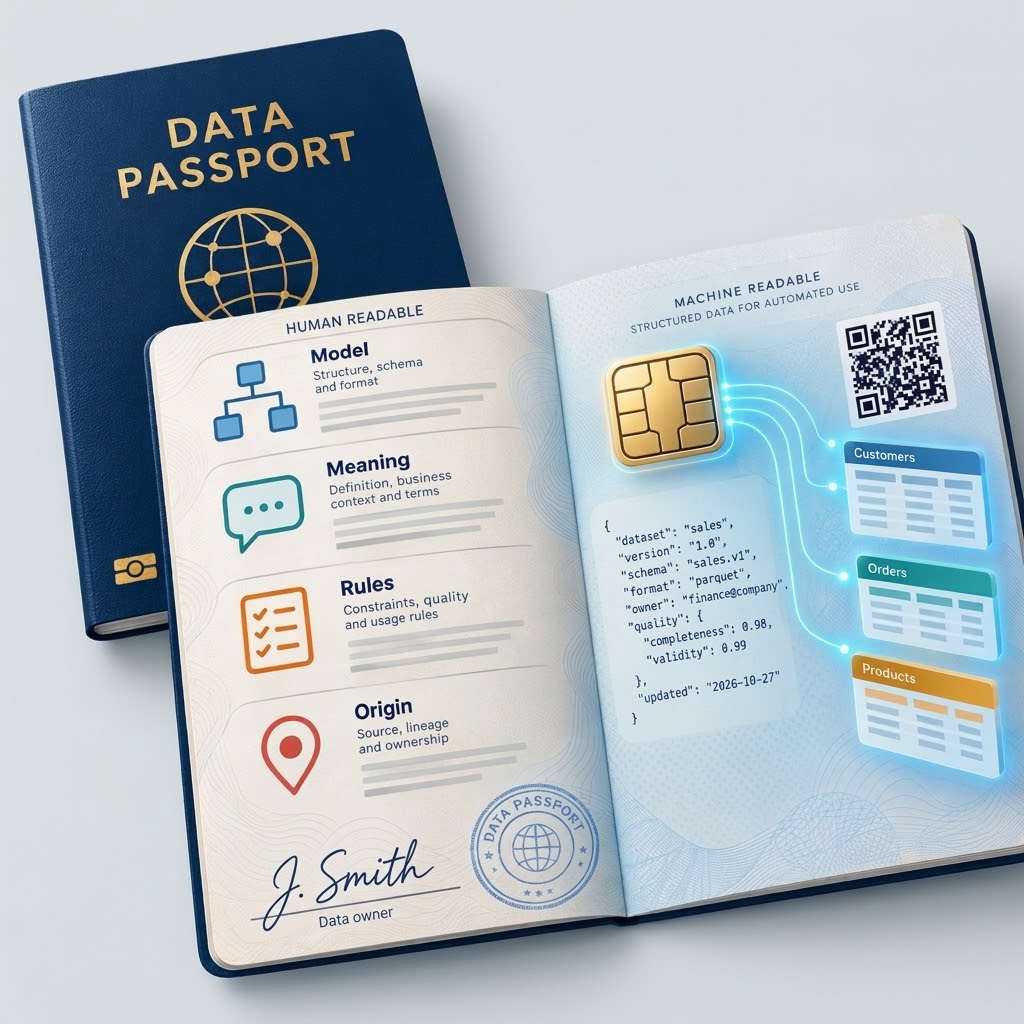
An open data passport: readable for people on the left, for machines on the right

Help develop v0.2

I am forming a small group to develop the next version of the data passport. We will try it on real datasets, work out the smallest passport that is still useful, and see what we can reuse from existing standards. If you publish, reuse or govern data, I would like to hear where you think it would help, and where it might fall short.

Help develop v0.2

About the data passport

Latest milestones

All milestones →

Help build it

The passport gets better with every person who uses it, tests it or disagrees with it. Producers, users, standards people, builders, lawyers and AI people: there is a place for you.

Join us

I’d love to hear from you